Okra: From My Garden to the Frying Pan
|
This summer has been a wonderfully prolific okra season for me. Once the plants started blooming, I’ve been picking almost every day. And my favorite way to cook those beautiful little pods? Dredged in cornmeal and fried until they’re crisp and golden. |
|
I thought I’d show you the whole process here, so you can take advantage of the last of this season’s crop—or perhaps start planning to grow your own next year. |
|
First, I Love the Plants |
|
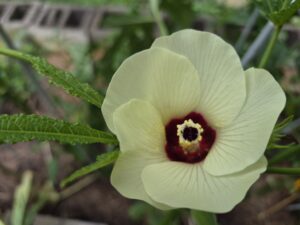
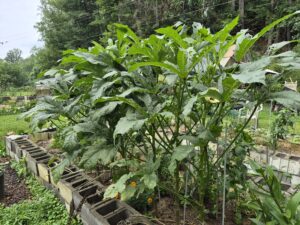
Before we get to the frying pan, I just have to show you how beautiful okra plants are. They grow tall and lush, with gorgeous creamy-yellow blooms that look almost tropical in the garden. The Latin name is Abelmoschus esculentus. Okra is native to West Africa and spread very early into tropical cuisines around the world, where it became an important and much-loved ingredient. West Africans introduced okra to the cuisines of the New World. |
|
Once the flowers bloom, it happens quickly. The delicate blossoms wrinkle up and disappear, leaving behind a tiny okra nub ready to start stretching toward picking size. |
And let me warn you: okra can go from perfect to long and stringy in what seems like a heartbeat! That’s why I pick so often.
|
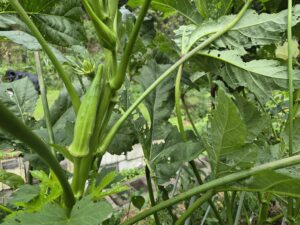
My favorite size for eating is just a little longer than my little finger. I have big hands, so about 3 inches long is my goal. At that size, I think they are absolutely perfect. Another handy measurement—especially if you’re interested in pickling—is to harvest them when they will fit neatly into a pint canning jar. That’s about 3½ inches. |
|
I harvest the okra off the plant with my hand pruners. The pruners make a nice, clean cut and leave a bit of stem attached to each pod. |
|
And now comes one of my favorite tricks.
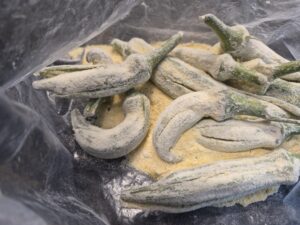
If you look closely at the picture of the okra sitting in the cornmeal dredge, you’ll notice I haven’t cut it into rounds, which is probably the most common way of preparing fried okra. Instead, I leave the pods whole and cut them lengthwise, right down the middle, leaving the stem in place. |
|
I learned this trick from Chef Travis Milton when he ran a restaurant here in Charlottesville, and it makes a hell of a difference in what everybody leery of okra calls the “slime factor.” |
|
Cutting them this way means that everything gets beautifully coated with the dredge, and when they hit the hot fat, the result is wonderfully crisp. No slimy interior to put anyone off—just crunchy, golden fried okra. |
|
Ah, the Dredge! Now for the part that makes fried okra so good. |
|
I have a go-to, universal dredging mixture that I keep in a bag in the refrigerator. It’s always ready to go whenever I want to fry up some green tomatoes or okra. |
The mixture is wonderfully simple:
- A big scoop of cornmeal
- A big scoop of flour
- Salt
- Garlic powder
- Black pepper
I don’t fuss too much with exact measurements. I just scoop everything into a sturdy bag, give it a good shake to mix it all together, and it’s ready for action.
For the okra, I pop the cut pods right into the bag and shake away. The trick is not just to toss them around, but to gently massage the dredge into the cut sides. That gets all those little nooks and crannies nicely coated.
Then I take each piece out and give it a little shake to loosen any excess flour before it goes straight into the hot frying pan.
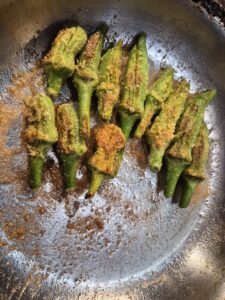
Into the Frying Pan
I fry my okra in home-rendered lard, which gives it a particularly wonderful flavor, but you can certainly use whatever cooking fat you prefer.
The important thing is that the fat is hot enough to sizzle the okra immediately and form a good, crisp crust.
Once the okra goes into the pan, I cook it until the dredge is golden and crisp, turning each piece at least once so both sides get their share of the hot fat.
And then—this part is important—serve them hot!
Really hot.
There is nothing quite like a pile of freshly fried okra, still crisp from the pan. Yum!
Eventually, even I have had my fill of fried okra. When that happens, I stop harvesting the pods and let the plants do their thing. I leave the remaining fruit on the plants to mature and dry right there in the garden throughout the fall.
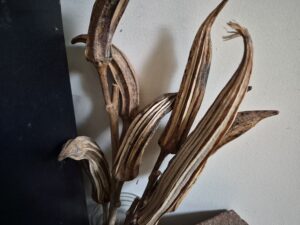
The dried pods are beautiful. I use them as decorations, and they have another delightful feature: the seeds inside the dried pods rattle when you shake them.
Children especially love that.
And, of course, there’s one more benefit. Those dried pods give me seed for next year’s crop. In fact, the okra seed I grow came to me many years ago. I was originally given it when I visited the Alabama St. Community Garden in Houston, Texas, in 2009.
So every year, when those tall plants bloom and begin producing their little pods, I’m reminded that a garden can carry stories forward for a long time.
A handful of seeds from a garden visit in Texas in 2009 eventually became years of summer okra in my own garden—and, thankfully, a whole lot of crispy fried okra along the way!
Happy gardening!